
Automated Backlink SEO: Minimizing Risks & Maximizing Safeguards (2025)
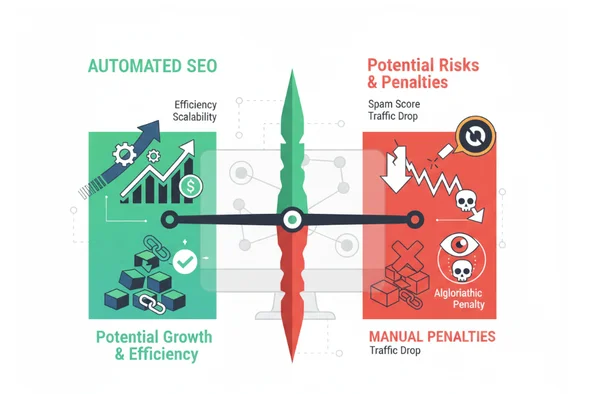
Building a strong website takes time. However, building high-quality links often takes even longer. For many years, SEO professionals have looked for ways to speed up this process. This led to the rise of automation. Using automation for link building is often seen as a "double-edged sword." It can save you hundreds of hours. But if done incorrectly, it might harm your site’s reputation with search engines.
Is it possible to use automation without getting penalized by Google? The answer is yes. You must understand the balance between speed and quality. Most people fail because they use outdated tools that create "spam" rather than value. To succeed in 2025, you need to use automated backlink tools that focus on relevance and human-like interaction.
In this guide, we will explore how to navigate the world of automated link building. We will look at the risks you must avoid and the safeguards you can put in place. Our goal is to help you build a sustainable SEO strategy. By using the power of AI, you can grow your organic traffic safely.
Understanding the Automated Backlink Landscape
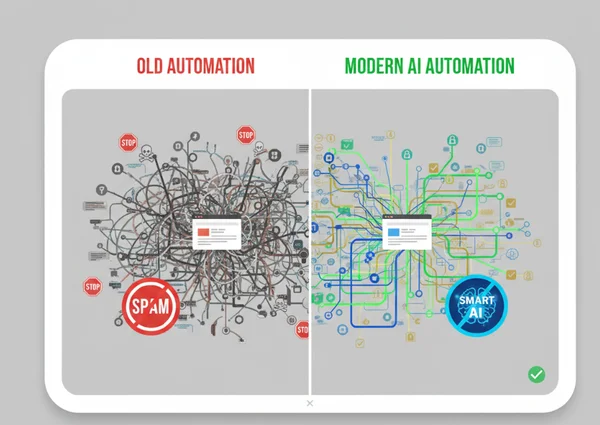
Before we dive into the risks, we need to define what "automated" means today. In the early days of the internet, automation meant blasting thousands of low-quality submissions across the web. Today, the landscape is much more sophisticated. Modern tools focus on helping humans do their jobs more efficiently rather than replacing them with bots.
What Constitutes Automation in Modern SEO?
Modern automation covers a wide range of activities. At the simplest level, it includes tools that help you find link opportunities. It can also help you manage outreach campaigns. At a more advanced level, it involves using AI to generate personalized descriptions for directory submissions or other link placements.
Today’s smart tools, like our AI-powered backlink assistant, work by supporting the user. For example, a tool might identify a relevant website. It then uses AI to write a thoughtful description that fits the topic perfectly. This is very different from the "spray and pray" methods of the past. It combines the speed of a machine with the nuance of a human writer.
The Evolution of Google's Stance on Automated Link Building
Google’s main goal is to provide users with helpful, relevant content. In the past, Google used simple filters to catch automated links. Today, they deploy advanced systems.
Google now deploys AI like SpamBrain to spot unnatural linking patterns. Unlike older filters, it learns and adapts—making low-effort automation suicidal. Survive by prioritizing relevance. Google does not necessarily hate automation itself. They hate "spam." If an automated process results in a high-quality, relevant link, it is much less likely to be flagged. The focus has shifted from how the link was created to what value the link provides. This is why choosing AI-enhanced SEO automation tools is more important than ever.
The Critical Risks of Automated Backlink Building
While efficiency is great, you must be aware of the dangers. Using the wrong tools can lead to serious consequences. Understanding these risks is the first step toward building a safe strategy.
Algorithmic Penalties: Manual vs. Algorithmic Actions
There are two main ways Google can punish a website. The first is a manual action. This happens when a human reviewer at Google decides your site is violating guidelines. You will usually see a notification in your Google Search Console. Manual actions are often triggered by obvious "link schemes." Massive amounts of low-quality automated links also trigger them.
The second type is an algorithmic penalty (or filter). This is more common. Google’s software simply stops counting your links. It might also lower your rankings because it detects a pattern of manipulation. You won't get a notification for this; your traffic will just drop. To avoid this, you need to get quality backlinks that look natural to the algorithm.
Quality Degradation: When Automation Meets Irrelevance
One of the biggest risks of automation is losing the "human touch." Many old-school tools generate generic text like "Great site, thanks!" This is a red flag for search engines and website owners. If your backlinks appear on sites unrelated to your niche, they are useless.
When automation ignores relevance, your profile quality drops quickly. A few high-authority, relevant links are worth more than 1,000 irrelevant ones. Your automation must understand the context of the page it is interacting with. This is where AI-driven content generation becomes a game-changer.
The AI Detection Arms Race: How Spotting Automation is Becoming Smarter
As AI tools become better at writing, Google’s detection systems become better at spotting them. It is a constant "arms race." Systems are now looking for "footprints." These are specific patterns that suggest a machine created the content.
If you use a tool that produces the same template-based text every time, you are leaving a footprint. To stay safe, your automation must produce unique, diverse, and high-quality content. This is why we recommend using AI-driven backlink strategies that focus on creating personalized descriptions. These texts should always mimic human writing styles.

Ethical Automation Framework: Safeguarding Your Backlink Strategy
Automation doesn't have to be "black hat." You can use it ethically to grow your site. An ethical framework ensures you are providing value while saving time. By following a few core principles, you can protect your site from penalties.
The Three Pillars of Safe Automation: Quality, Relevance, and Moderation
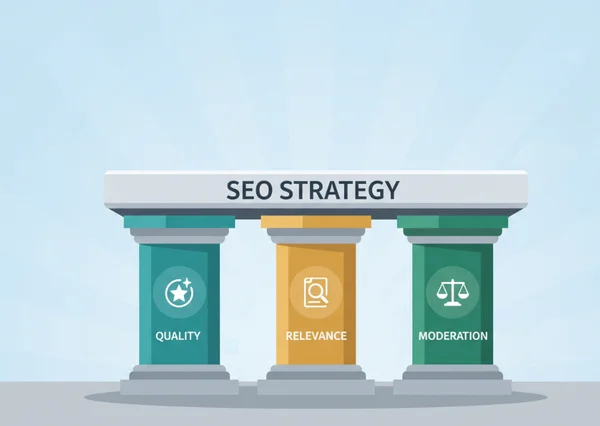
To keep your SEO strategy safe, you should follow these three pillars:
- Quality: Every link should come from a site with real traffic and a good reputation. Avoid "link farms" or sites that exist only to sell links.
- Relevance: The link must make sense in context. If your site is about "pet food," your links should be on pages about animals or health.
- Moderation: Do not try to build 5,000 links in one day. A natural link profile grows steadily over time. Sudden spikes in link count can trigger red flags.
By focusing on these pillars, you can build backlinks fast without making your site look like a target for spam filters.
How our AI-powered backlink assistant implements safeguards
We designed our assistant to solve the common problems of automation. Our tool isn't a "set and forget" bot that spams the web. Instead, it is a smart assistant that lives in your browser. It helps you find the right places to build links. Then, it uses AI to generate content specific to that page.
One of our key safeguards is AI-generated personalized content. Our system reads the target page. It then suggests a unique description or response. This ensures the site owner sees value in your contribution. They are much more likely to keep your link active. Furthermore, we provide monitoring tools so you can see the health of your links in real-time.
Monitoring and Adjustment: The Continuous Improvement Loop
SEO is not a one-time task. It is a continuous process. Even with the best tools, you need to monitor your results. You should regularly check which links are being indexed. You also need to see which ones provide the most value.
If you notice that certain types of links are not working, you must adjust. Our platform helps you track your history and the status of your links. This "loop" of building, monitoring, and adjusting is what separates experts from those who get penalized. You can track backlink health with our free chrome extension today to stay ahead of the curve.
Embracing Automation Wisely for Sustainable SEO Growth
Strategic automation is your shortcut to SEO dominance—but only if you respect Google’s evolving rules. Here’s how to scale safely in 2025. The risks of manual penalties are real, but they are mostly faced by those who prioritize quantity over quality. By choosing a smart, AI-driven approach, you can enjoy the benefits of speed without the fear of losing your rankings.
The future of SEO belongs to those who can combine human strategy with machine efficiency. Focus on relevance, provide real value with your content, and grow your link profile at a steady pace. If you follow these safeguards, automation will become your greatest competitive advantage. Transform your workflow today by focusing on high-quality, safe, and effective links.
FAQ Section
Can Google detect when I use automated tools for backlinks?
Google’s AI relentlessly hunts spam patterns. If your tool churns out robotic text or irrelevant links, expect penalties. Survive by using AI that mimics human nuance, such as smart automation services that prioritize quality and context over sheer volume.
How many backlinks per month is safe when using automation?
There is no "magic number." A large, established site might safely gain hundreds of links a month. However, a brand-new site should start much slower. The most important thing is "link velocity." The rate at which you gain links should look natural and steady. Avoid sudden, massive spikes that don't match your content output.
Are automated backlinks still effective in 2025?
Yes, they are highly effective if you use modern methods. Automation in 2025 is about AI-assisted outreach and personalized submissions. It helps you find high-authority directories and blogs that you might have missed. By using our AI-powered backlink assistant, you can automate the tedious parts of the job while maintaining high quality.
How can I tell if my automated backlinks are hurting my SEO?
Watch your rankings and your organic traffic in Google Search Console. A sharp drop in rankings for target keywords without a clear reason is a warning sign. You should also check for "manual actions" in your notifications. If you suspect a link is bad, stop that specific strategy and focus on higher-quality sources.
Is buying backlinks bad for SEO even when automated?
Buying links is technically against Google's Webmaster Guidelines. However, many businesses invest in tools to help them acquire links. The risk depends on the quality. Buying 5,000 links for $10 will likely hurt your site. If you invest in a professional SEO tool that helps you build legitimate, high-quality links, you are building a real asset for your business.