
Directory Submission Checklist for New Sites
Why new sites need a quality filter before submitting anywhere
A new site usually needs two things at the same time: early visibility and a clean backlink foundation. Directory submissions can help with that, but only when the directory is relevant, maintained, and worth being listed in.
The common mistake is treating every directory as a win. That creates a pile of weak submissions, messy business profiles, and no clear record of what was sent where. A better approach is to screen opportunities first and automate only the work that passes review.
That is where an AI backlink workflow makes sense. The speed matters, but the bigger advantage is turning repeatable directory work into a structured process instead of a rush job.

What directory submission should accomplish for a new site
Directory submissions are most useful when they support a foundational backlink profile. That means basic, credible mentions that help search engines and people understand what the site is, who it serves, and where it belongs in its niche.
When directory backlinks help a foundational backlink profile
A good directory listing gives context, not just a link. It places the site beside similar businesses, tools, or resources and gives a short description that matches the real offering.
Google's [Search Central spam policies] updated on December 10, 2025 explicitly list low-quality directory or bookmark site links as link spam and note that policy-breaking sites may rank lower or not appear in results. That is why directory submissions only help when the directory has a real audience, real moderation, and a reason to exist beyond selling links.
For a new site, the goal is not volume. The goal is a short layer of relevant profiles that make the backlink profile look normal, accurate, and easy to verify.
When a directory is a poor fit from the start
Skip a directory when the category pages are thin. Skip it again if the site accepts almost anything or if every listing looks copied from the last one. The same applies when the directory pushes exact-match anchor text, hides ownership, or looks abandoned.
A poor-fit directory also wastes time. Even if a submission goes live, the listing may add no useful trust signal and may create cleanup work later.
The 5-Point Directory Submission Checklist
The easiest way to stay selective is to score each opportunity against five questions before any form is filled.
- Is the directory relevant to the site's niche, geography, or audience?
- Is there visible editorial review or at least some sign that low-quality listings are rejected?
- Does the profile page allow a complete, accurate description instead of a bare URL dump?
- Does the directory present links in a normal way rather than using stuffed anchor text or hidden placement?
- Can the listing be tracked later for status, edits, and live-link review?
Relevance and editorial review
Relevance should be obvious within a few clicks. A startup directory, a local chamber directory, and an industry association page each serve different needs. If the listing would still make sense without SEO value, it is more likely to be worth the effort.
Editorial review matters because it creates friction against spam. Google does not say that every approved directory is good, but its spam guidance makes clear that low-quality directory links are a risk. A directory with categories, review rules, and visible standards is usually safer than one that accepts any site instantly.
Google's [link best practices] also say anchor text should be descriptive, concise, and relevant, and the page lists generic anchors such as "Click here" and "Read more" as bad examples. If a directory turns every profile into manipulative anchors, that is a warning sign.
Profile fields, consistency, and link format
A listing is stronger when the business name, short description, and homepage URL stay consistent across submissions. That consistency makes the profile easier to review and easier to manage later.
Link format also matters. Google's [outbound link qualification guidance] updated on December 10, 2025 names 3 rel values for qualified links: sponsored, ugc, and nofollow. That does not mean a nofollow directory is useless. It means the listing should be judged by relevance, trust, and profile quality instead of by dofollow claims.
A directory becomes weaker when it forces awkward slogans, stuffed category labels, or extra fields that make the profile look artificial. Clean, readable business information is usually the better choice.
Signs the submission is not worth automating
Do not automate a directory just because a form exists. Reject it when the page is overloaded with ads, full of broken listings, or clearly built to host outbound links with no editorial purpose.
Also reject any directory that asks for risky behavior, such as spun descriptions, fake locations, or repeated keyword variations for the same site. Automation should remove repetitive work, not remove judgment.

How to prepare submission data before opening the workflow
Preparation keeps submissions clean. Before opening any workflow, collect the business name, homepage URL, short description, longer description, core categories, logo if needed, and a contact email that can actually receive replies.
That prep makes a browser extension for directory submissions more useful because the tool can fill fields faster when the source information is already reviewed. It also reduces the chance of sending different versions of the same business story across multiple directories.
The business details and descriptions to keep ready
Keep one short description around 25 to 40 words and one longer version around 60 to 100 words. Both should explain what the site does in plain English. Avoid taglines that promise rankings, guaranteed traffic, or broad services the site does not offer.
It also helps to define one approved homepage link, one approved brand name format, and one shortlist of categories. That makes later tracking much easier.
A simple approval step before any team submission
Even a solo operator benefits from a final review step. For teams, this should be a simple yes or no check before submission begins.
The reviewer only needs to confirm four things. The directory should be relevant, the profile copy should be accurate, the homepage link should be correct, and the opportunity should be worth tracking. That 30-second check prevents hours of cleanup.
A low-risk workflow for faster submissions
The safest workflow is simple: research the opportunity, prepare the profile data, review the page, submit the form, and log the result. This mirrors how strong teams treat repetitive SEO work. Speed comes after the decision, not before it.
Research, fill, review, submit, track
Start with a shortlist instead of a giant spreadsheet. Review each directory quickly, mark pass or fail, and only then move it into the submission queue. After that, use the workflow to fill fields, check the final page, submit, and record the result.
The record should include submission date, directory name, category, profile status, follow-up notes, and whether the listing went live. Over time, that turns scattered tasks into reusable operating knowledge.
How to avoid turning automation into spam
Automation becomes spam when the same copy is pushed everywhere without checking fit. It also becomes risky when every directory is treated as equal.
A better rule is simple: automate the form filling, not the judgment. When quality review stays manual and the execution becomes faster, the process supports a stronger backlink foundation.
What to do next after the first round of directory submissions
After the first round, review what actually happened. Which directories approved the listing? Which ones needed edits? Which ones were not worth the effort?
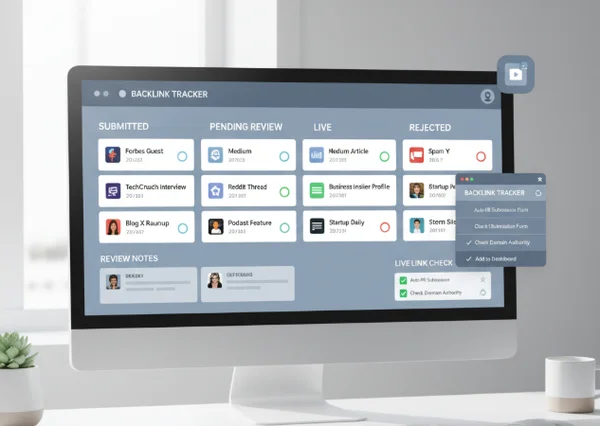
This is where a submission history dashboard becomes more useful than another long list of targets. A clean history helps with follow-ups, live-link checks, and future team handoffs.
New sites do not need endless directory submissions. They need a small, defensible set of listings that support trust, reflect the real brand, and fit the site's niche. That is the point of the checklist: better decisions first, faster execution second.
FAQ about directory submissions for new sites
Do directory submissions still help new sites?
They can help when they are relevant and selective. The value comes from credible profile placements, not from mass submission.
How many directories should a new site review first?
A short reviewed list is better than a huge target list. For most new sites, reviewing a focused batch first makes quality control easier and tracking cleaner.
What makes automation safe for directory submissions?
Automation is safest when it follows an approved checklist, uses accurate profile data, and keeps a record of what was submitted. That keeps the process efficient without turning it into blind bulk work.